
CEO’s Message – Foodland Crossing – George Street, Moonta
CEO’S MESSAGE – FOODLAND (DRAKES) CROSSING – GEORGE STREET, MOONTA
I consider it important to provide information on the history and establishment of the pedestrian crossing and rain gardens on George Street, Moonta
The pedestrian crossing on George Street in front of Foodland (Drakes) was part of the Moonta Urban Design Framework, which was adopted by Council on 12 February 2020 following an extensive Public Consultation process below:
- Physical walk through CBD with contractors WAX Design, staff, elected members and members of the public (June 2017)
- First public meeting held in Moonta Town Hall (June 2017)
- First public survey undertaken (4 weeks, June to July 2017)
- Meeting with Moonta Traders Association (8 May 2019)
- Presentation to Moonta Association (5 May 2019)
- Community consultation day on Saturday, 1 June 2019
- Second public survey (8 weeks, June to August 2019)
- Third public survey (4 weeks, November to December 2019).
The first (over 250 responses) and second (over 400 respondents) public surveys helped Wax Design create the Framework’s actions and projects.
During the second public survey and community consultation day on Saturday, 1 June 2019 (outside of Foodland), members of the community were given four options to choose from for the Foodland Entrance. In each instance of the 391 members of the public and 36 Moonta Traders members who completed the survey, and the 92 people who picked an option at the community consultation, option two received the majority of votes (options and evidence below).
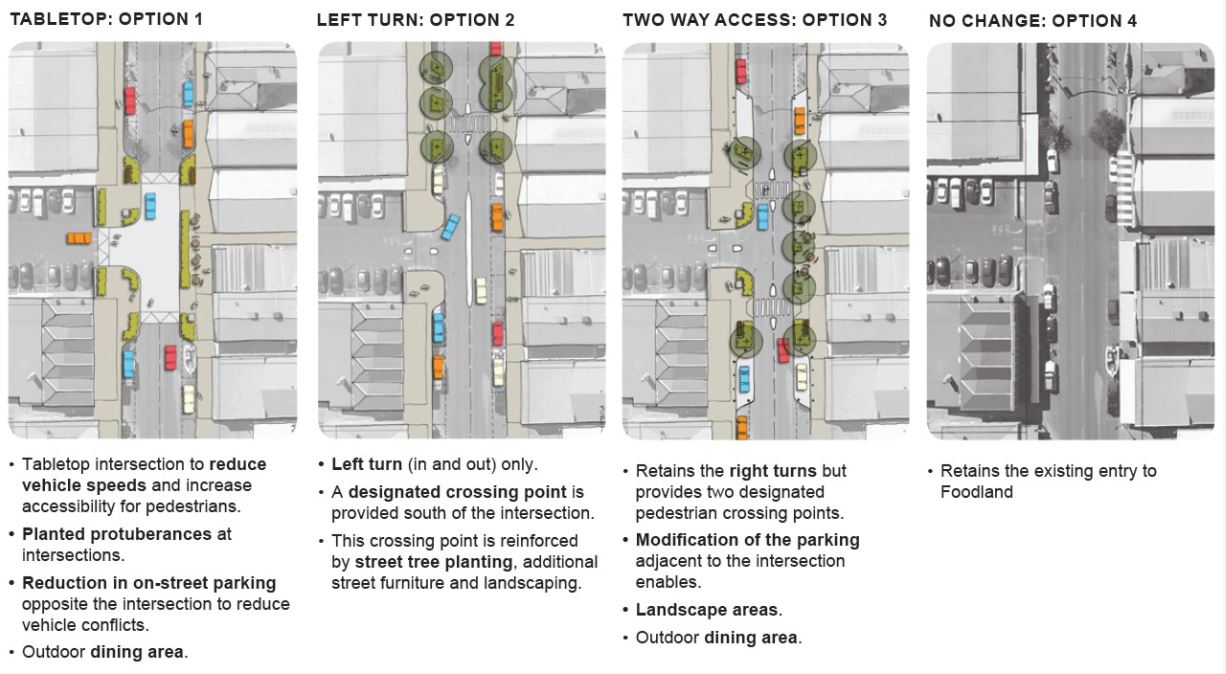
The four options presented for the Foodland Entrance
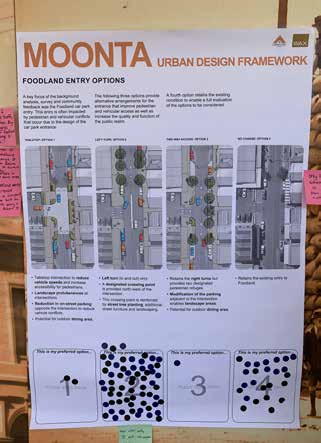
Public consultation day for Foodland Entry Options on Saturday, 1 June 2019 outside of Foodland.
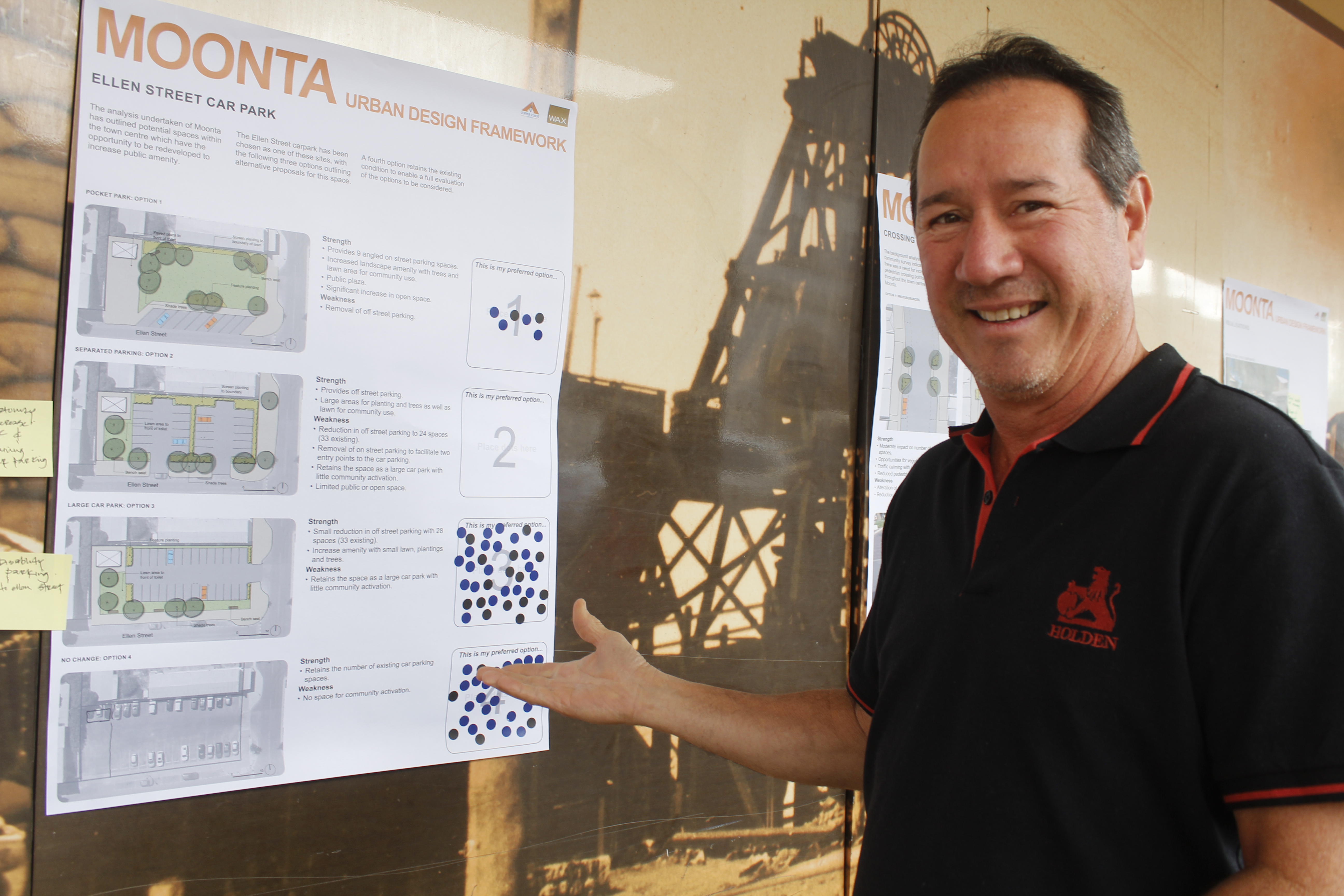
How each of the project options were presented to the general public during community consultation day on Saturday, 1 June 2019 outside of Foodland. This is an image of Moonta's Steve Ipsen choosing his option for the Ellen Street Car Park.
According to the final Moonta Urban Design Framework, a key action was the Foodland Entry.
The Government of South Australia Department of Planning, Transport and Infrastructure’s Manual of Legal Responsibilities and Technical Requirements for Traffic Control Devices – Part 2 – Code of Technical Requirements is applicable. Figure 8.2 Wombat crossing details (see below) outlines the requirements of NO parking on the left-hand side of the road 20 metres before the crossing and 10 metres after.
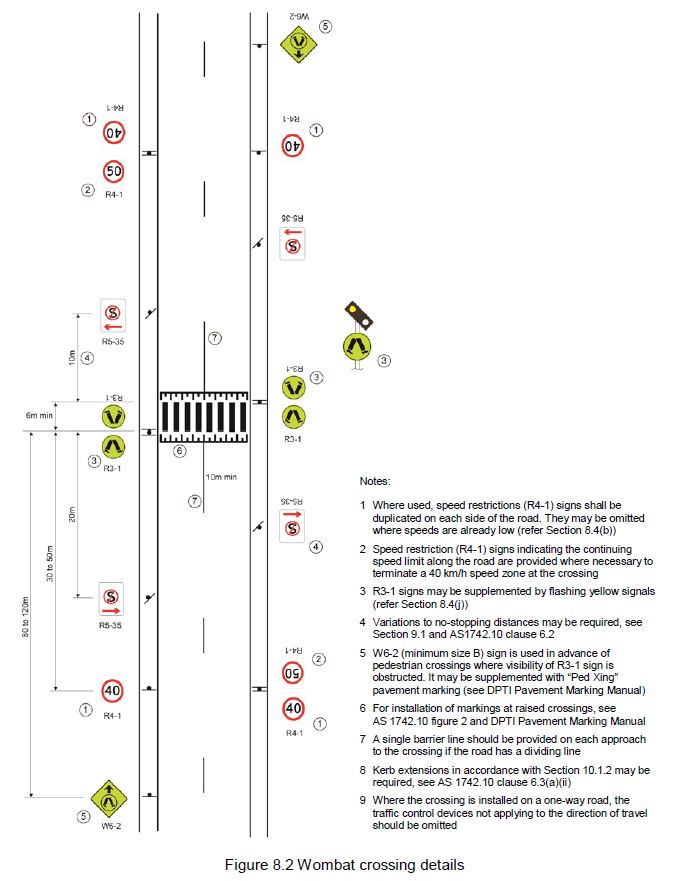
Whilst some parking spaces had to be removed to comply with these requirements, the amount of disabled car parks were retained to support less mobile residents, as suggested in the Moonta Urban Design Framework. The speed limit has also been reduced to 40km/h at the crossing as part of the Code of Technical Requirements mentioned above and so as to make the crossing safer.
The pedestrian crossing has been designed to make this crossing safe and comply with ALL State requirements for such crossing.
In addition, the Framework stated “the community consultation process has highlighted the need to upgrade the existing pedestrian refuge crossing point on George Street.” The Framework clearly stated the following recommendations under Urban Design Projects-Crossing options (page 24):
- Raised Zebra crossing providing crossing point with pedestrian priority.
- Kerb ramps.
- Feature planting areas.
- Street trees.
The engineers decided an asphalt crossing would be better instead of the proposed paved crossing would avoid any ground movement from motorist and pedestrian use.
Further, the rain garden is designed to fill up with stormwater to also assist in preventing flooding. Recent rain events in Moonta have NOT contributed to the flooding of Foodland as a result of the pedestrian crossing and the rain garden.
The installation of the rain gardens satisfied the Framework’s recommendation for garden beds with a water sensitive urban design to increase stormwater intake during rain events. Rain gardens are not new, with Council areas across South Australia and the nation utilising them to collect and purify stormwater on roads and other hard surfaces for plants.
Specific plants and soils are chosen to absorb the pollution from stormwater and as the water soaks down, filtered water remains, improving the quality of water that flows to the ocean. We must use our water better and the rain garden does this.
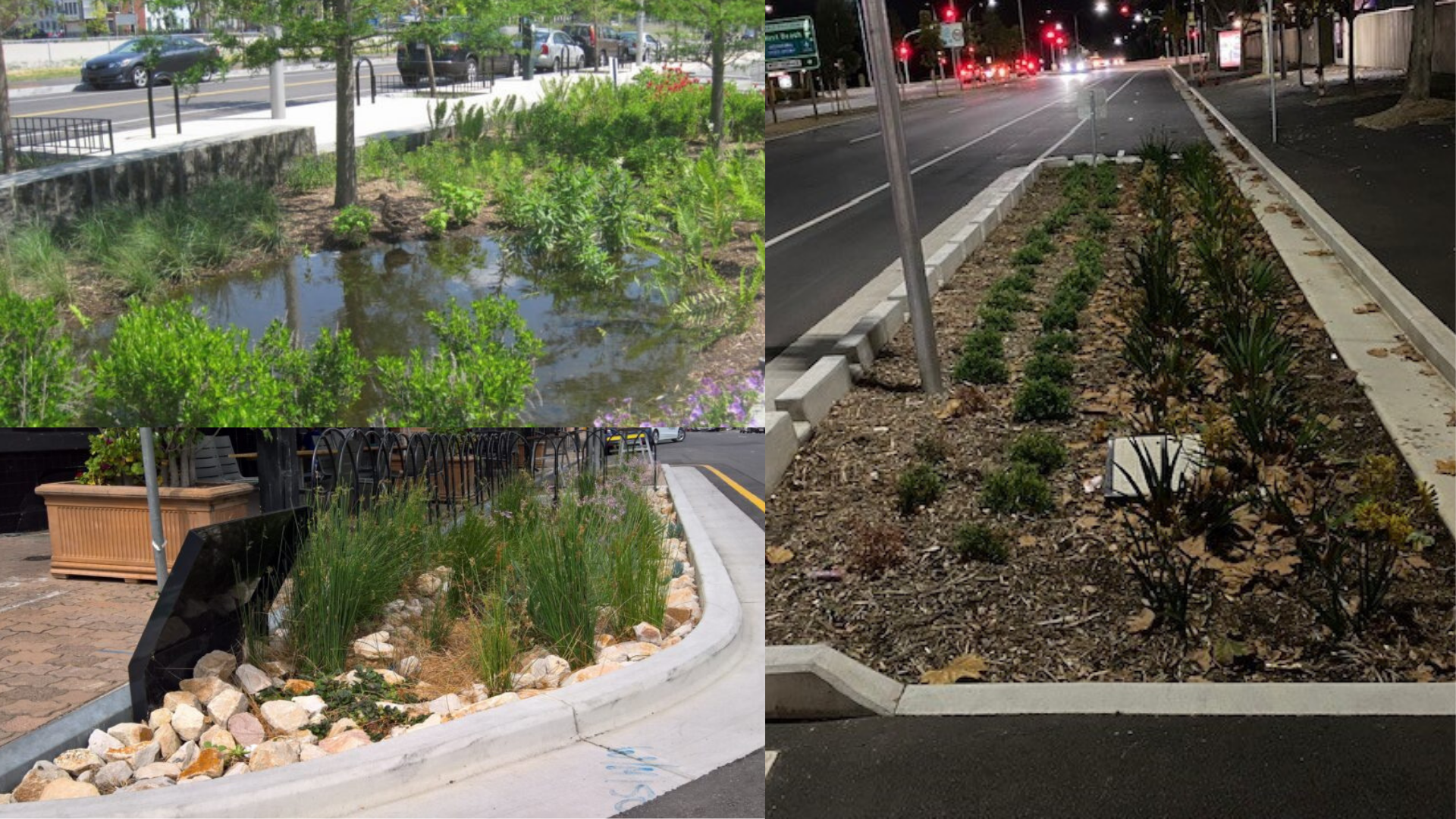
Top left: An example of a rain garden following rainfall. Bottom left: Grote Street, Adelaide. Right: Gilbert Street, Adelaide
The Moonta Stormwater Plan determined that stormwater upgrades were NOT required from Blythe Terrace to Ellen Street (Moonta Hotel to the Antique Shop). However, a further pedestrian crossing (which people wanted) around Café Capella should NOT be installed as stormwater drainage is required before this can be done.
To put a pedestrian crossing here may cause flooding of some shops. This is why this has NOT been done until the stormwater upgrade has been done for this area.
For more information, the final Moonta Urban Design Framework is available on our website and can be viewed by clicking here
Russell John Peate
Chief Executive Officer
Copper Coast Council